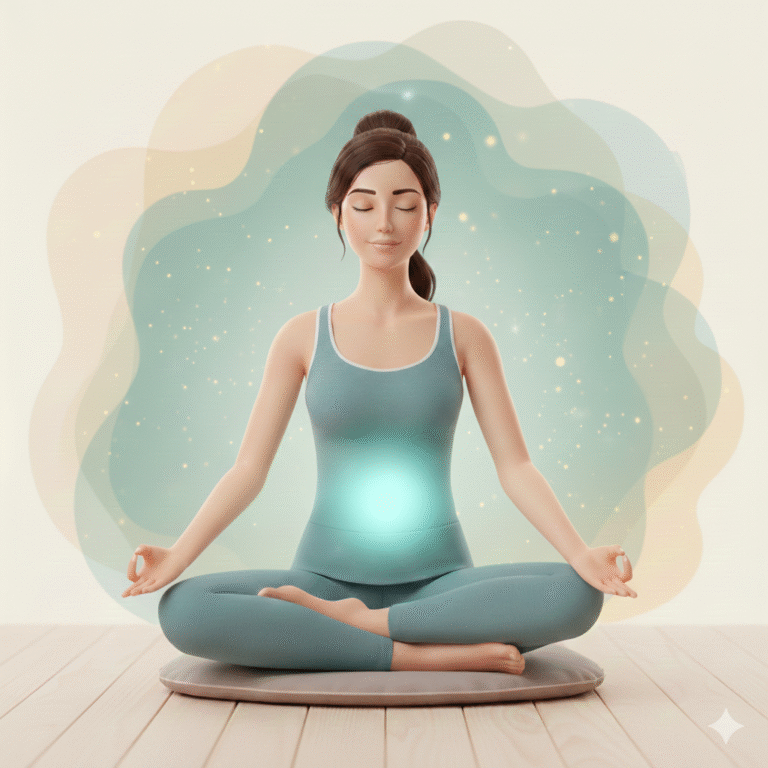
You wouldn’t say that you need to learn how to breathe; we are all doing it 24/7. Nevertheless, the breath has incredible possibilities to enhance your mental state. In the yoga world, breathing techniques are called pranayama, and there are hundreds, if not thousands, of types, all with their own specific benefits.
As explained in [Quieting the Mind], you can use pranayama for beginners to relax your mind. While there are many courses available online, you can start right here with three methods to connect with your own truth.
I will give you three breathing techniques for anxiety and mental clutter. You can do them lying down, sitting in a chair, or on a meditation cushion. Practice one of these for just 5 minutes a day, and in a week, you will notice a calmer mind.
These are the three I use regularly because they are so easy to integrate into a busy life:
- Deep Belly Breathing – Slows down the heart rate and relaxes the body.
- Alternate Nostril Breathing (Nadi Shodhana) – Balances the mind and emotions.
- Box Breathing (4-4-4-4) – A structured pattern that brings immediate focus and calm.
How to Do Belly Breathing
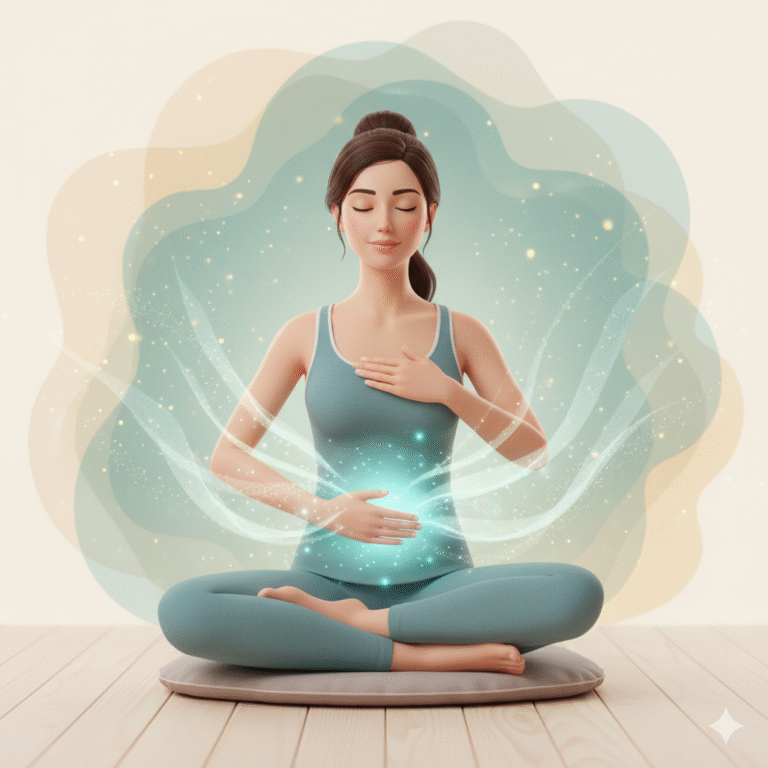
This is a technique I taught my son when he was facing university anxiety. I told him he could even do it while standing in a bar with a beer in one hand and his other hand on his belly!
Normally, as we inhale, our lungs expand and push the diaphragm down, causing the belly to move out. However, when we are anxious, we breathe superficially. This causes a lack of oxygen and an excess of carbon dioxide, which creates a “vicious circle” of more anxiety.
Steps for Deep Belly Breathing
Get Comfortable: Sit, lie down, or stand. Place one hand on your chest and the other on your belly.
Inhale Through the Nose: Breathe in slowly, making the hand on your belly rise while the chest remains still.
Exhale Through the Mouth: Purse your lips and exhale slowly, feeling your belly fall inward.
Repeat: Continue for 5–10 breaths. If you do this regularly, this will become your natural breath again.
Alternate Nostril Breathing (Nadi Shodhana)
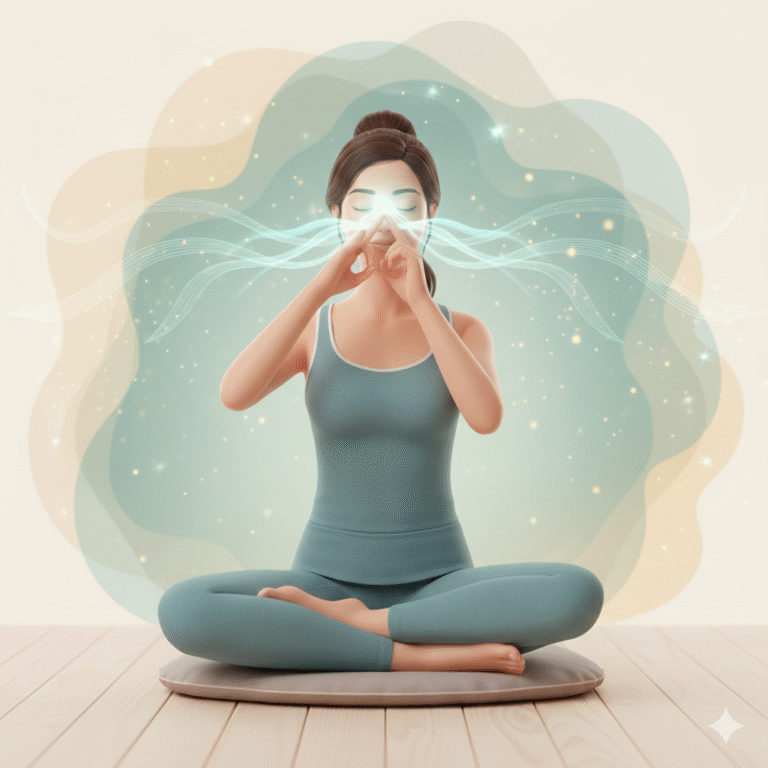
A staple in yoga, this is one of the best breathing techniques for anxiety and emotional balance. Nadi Shodhana is designed to sync the left and right hemispheres of the brain to create equilibrium.
How to Practice Nadi Shodhana
Preparation: Sit with a straight spine and relax your left hand.
Hand Position: Use your right thumb to close your right nostril and your right ring finger for the left.
The Flow:
- Close the right nostril, inhale through the left.
- Close the left, release the thumb, and exhale through the right.
- Inhale through the right.
- Close the right, release the ring finger, and exhale through the left.
Cycle: Repeat for 5–10 rounds to feel centered.
Box Breathing (4-4-4-4): Your Mental Anchor
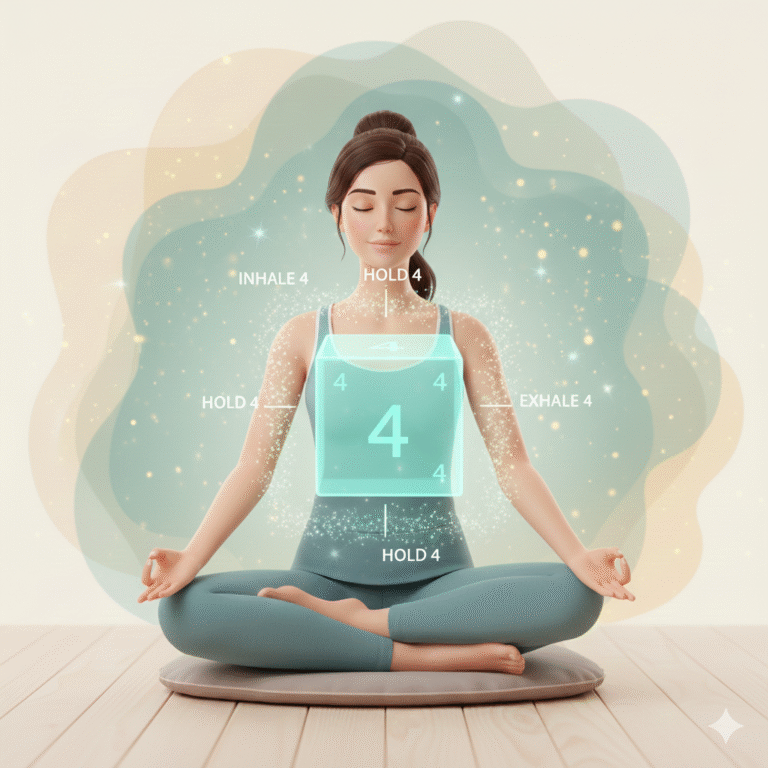
Box breathing for focus and calm is a technique used by elite professionals to manage high-pressure moments. Its symmetry provides a mental anchor for a cluttered mind.
How to practice box breathing
Empty Your Lungs: Exhale all air out.
Inhale (4 seconds): Breathe in slowly through your nose while counting to four.
Hold (4 seconds): Hold your breath gently for a count of four.
Exhale (4 seconds): Release the air smoothly for a count of four.
Hold (4 seconds): Hold your lungs empty for four seconds before the next inhale.
Visualize: Imagine tracing one side of a square for each 4-second step.
Cycle: Repeat for 5–10 rounds to feel centered.
Tip: after a time you can try if you can hold the breath longer for instance 6 seconds each phase.
Checklist for Success
Posture: Keep your spine tall to allow your lungs to expand fully.
Consistency: Just 2 minutes can shift your mood.
No Strain: If you feel dizzy, return to your natural breathing immediately.
Nose vs. Mouth: Unless specified, breathe through your nose to filter and warm the air.
Your soul is already with you—sometimes you just need to breathe to remember her.
I’d love to hear from you — what has surprised you most about this new chapter, or what are you most looking forward to discovering about yourself? Share in the comments below.