
During our lifetime we’ve gathered a lifetime of wisdom. We understand that our inner world profoundly shapes our outer reality. One of the most powerful truths we come to realize is that our emotions are formed by our thoughts. This isn’t to say emotions aren’t real, but rather that as the conscious creator of our reality, we hold immense power to influence them.
However, in our journey of spiritual growth and self-discovery, it’s crucial to acknowledge that simply trying to “think positive” isn’t always enough. Emotions, even the challenging ones, deserve to be recognized for them to be integrated in a healthy way. This is where the profound practice of ” Recognize, Explore, and Acknowledge”) comes into play – a beautiful framework for emotional processing.
The Dance Between Thoughts and Emotions
Imagine your thoughts as the current in a river, and your emotions as the way your boat (your inner experience) glides or struggles upon that current. If your thoughts are consistently critical, fearful, or judgmental, the emotional waters will naturally become turbulent. Conversely, if your thoughts are anchored in gratitude, acceptance, and love, your emotional journey becomes smoother and more expansive.
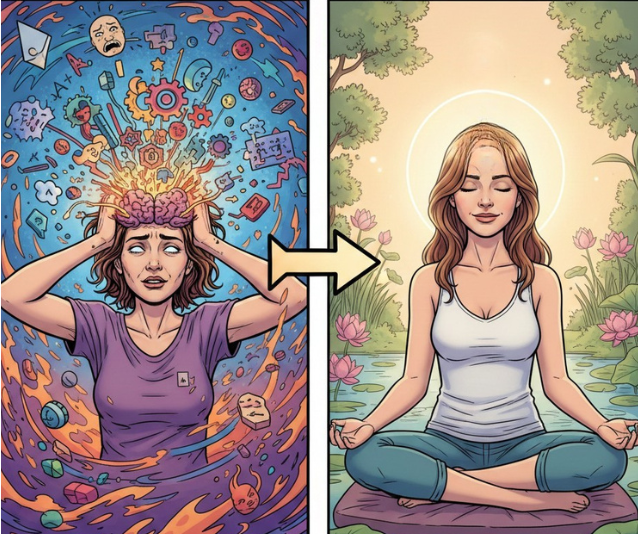
Yet, often, we’ve been taught to either suppress “negative” emotions or to be overwhelmed by them. Neither approach leads to emotional freedom. Suppressing them means they get stored in the body, potentially leading to physical discomfort or psychological distress. Being overwhelmed means we lose our sense of agency.
Recognition, Exploration and Acknowledgement
Get in touch with your emotions using recognition, exploration and acknowledgement.
Recognition: Naming What Is
The first step in healthy emotional regulation is simply to recognize what you’re feeling. Many of us have become adept at intellectualizing or ignoring our emotional landscape. But we do have the opportunity to cultivate a deeper, more embodied mindfulness for women.
When an uncomfortable feeling arises – perhaps a pang of sadness, a flicker of irritation, or a wave of anxiety – pause. Instead of immediately trying to push it away or understand why it’s there, simply say, “Ah, I recognize this feeling. This is sadness,” or “This is frustration.” This simple act of naming creates a vital space between you and the emotion. It’s not you that is the emotion; it’s an experience you are having. This is a cornerstone of self-compassion.
Exploration. Getting Curious
Once recognized, the next step is to explore the emotion with gentle curiosity. This is not about getting stuck in the story of why you feel it, but rather feeling into it.
- Where do you feel it in your body? Is there tightness in your chest, a knot in your stomach, tension in your jaw? Our bodies are incredible messengers. As Dr. Bessel van der Kolk often reminds us, “the body keeps the score,” and emotions manifest physically.
- What is the intensity? Is it a gentle hum or a roaring fire?
- What are its qualities? Does it feel heavy, light, sharp, dull?
This phase of inner work is about being an observer, much like a scientist studying a phenomenon without judgment. It’s a powerful way to practice emotional intelligence and deepen your conscious living.
Acknowledgement: Validating Its Presence
The final and perhaps most liberating step is to acknowledge the emotion. This means validating its right to exist, without needing to change it immediately. You might say to yourself, “It makes sense that I feel this way right now,” or “This feeling is here, and that is okay.”
Acknowledgment is profound because it ends the internal struggle against what is. When we resist an emotion, we give it more power. When we acknowledge it, we integrate it. This doesn’t mean condoning negative behaviors that might arise from it, but rather accepting the feeling itself as a part of your human experience. This is crucial for healing emotional wounds.
Your Conscious Choice: Steering Your Energy

After you have recognized, explored, and acknowledged your emotions, you arrive at a powerful crossroads. Now, it is your conscious choice to steer your thoughts and your energy in a more positive direction. This isn’t about denial; it’s about empowerment.
You’ve given the emotion its due. You’ve listened to its message, felt its presence, and integrated it. Now you can consciously choose to shift your focus:
- Is the thought true or are other perspectives possible? If possible, try a couple of other perspectives. The truth is only in the eye of the beholder, or thinker in this way.
- Gratitude Practice: Intentionally find things to be grateful for.
- Positive Affirmations: Reframe your thoughts with empowering statements.
- Creative Expression: Engage in activities that bring you joy and elevate your spirit.
- Connection: Reach out to loved ones or engage in community.
- Movement: Shift stagnant energy through gentle exercise, walking in nature, or dancing.
This ability to consciously choose your thought-stream and emotional state is the hallmark of a wise, spiritual woman. It’s the ultimate expression of your power as the creator of your reality.
Conclusion
Emotions are not enemies to be conquered, but messengers to be understood. By practicing Recognition, Exploration and Acknowledgement, we honor our entire emotional landscape. We move beyond simply reacting and step into conscious response, gently guiding our inner compass towards greater joy, peace, and emotional resilience. In our sixties, this practice offers a profound path to a richer, more integrated, and deeply fulfilling spiritual life.
I’d love to hear from you — what has surprised you most about this new chapter, or what are you most looking forward to discovering about yourself? Share in the comments below.